A high-end Kenya safari means private conservancy access, guide-to-guest ratios of 1:4 or better, fly-in itineraries that cut the long road transfers, and camps where the food, service and design compete with any five-star hotel. The Maasai Mara is the anchor, but the best itineraries layer in Laikipia, Amboseli and the coast. Budget from $1,000 to $3,000 or more per person per night — see our safari pricing guide, depending on season and property.
What separates a private conservancy from the national reserve
The main Maasai Mara National Reserve is excellent. It also gets crowded. On a busy July morning at the Mara River, you can count fifteen vehicles at a single crossing.
Private conservancies — Olare Motorogi, Naboisho, Mara North, Ol Kinyei — surround the reserve and share the same ecosystem and the same migrating animals. The difference is vehicle numbers. Most conservancies cap vehicles at six or fewer per sighting. Night drives are permitted. Off-road driving is allowed where it does not damage habitat. Walking safaris exist.
You pay more to stay in a conservancy camp than in the main reserve. The extra cost buys you access to a different experience of the same wildlife. Access and regulations are overseen by the Kenya Wildlife Service.
Maasai Mara — camps worth knowing
Angama Mara sits on the edge of the Rift Valley escarpment above the Mara Triangle, at an altitude that gives you a physical overview of the plains stretching north into Tanzania. The camp is widely cited for photography — the light at that elevation at dawn is different from anything at valley floor. It operates in the main reserve, which means no night drives, but the escarpment trail and the aerial perspective compensate.
Naboisho Camp is in the Mara Naboisho Conservancy, one of the higher-elevation grassland zones in the Greater Mara. Big cat density here is consistently high — the conservancy’s year-round resident cheetahs and the open sightlines give your guide an edge. Eight tents only.
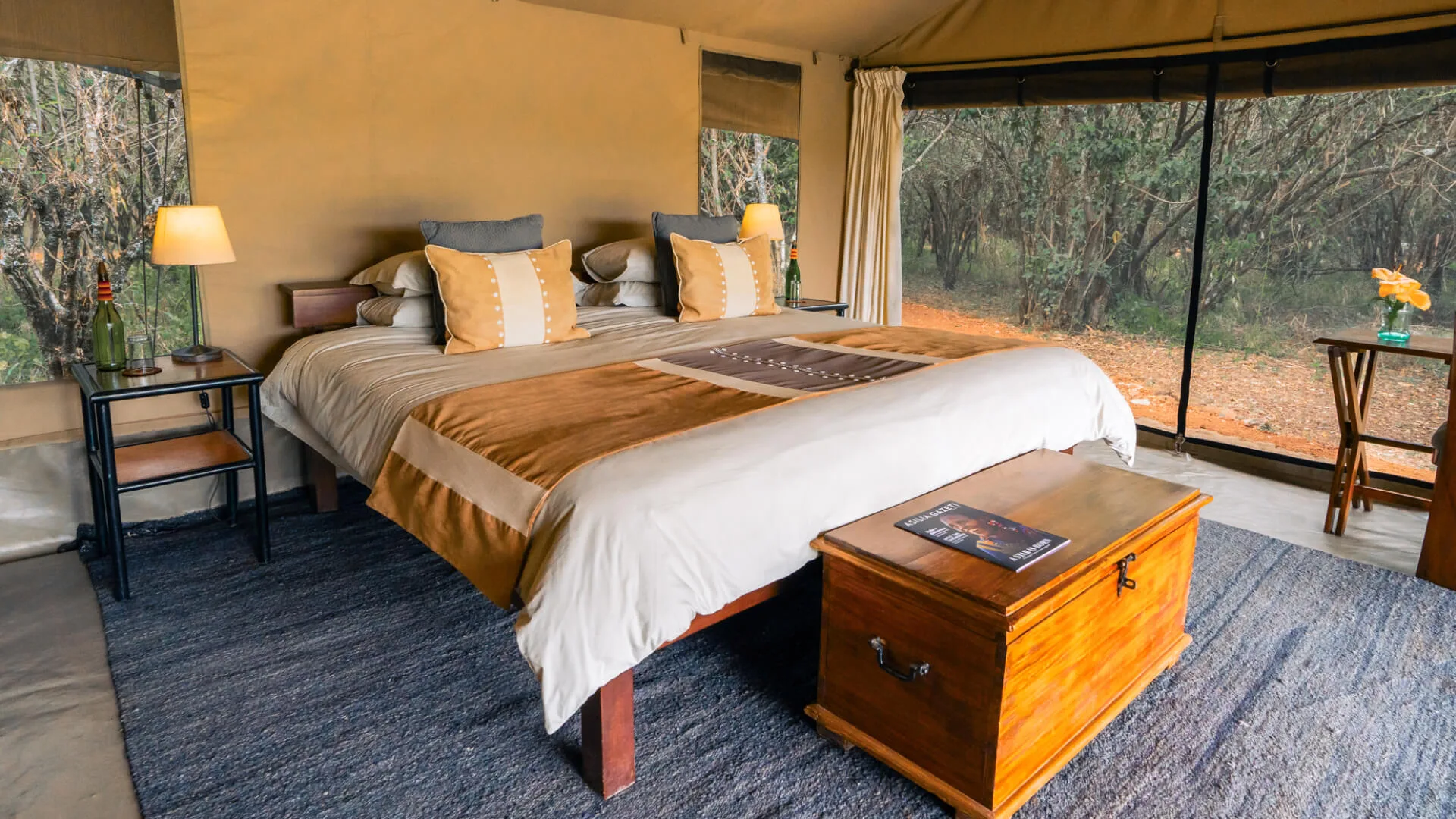
Mara Plains Camp operates in Olare Motorogi, a conservancy bordering the reserve with access to both. Small camp, well-designed tents, and a guiding standard that is consistently above average. Olare Motorogi is where you combine migration spectacle with proper walking safari access.
Amboseli — elephants and the mountain
Amboseli sits at the foot of Kilimanjaro and holds some of the best-studied elephant populations on earth. The Amboseli Elephant Research Project has followed individual elephants and family groups here for over fifty years. That data lives with your guide — they can tell you the name of the matriarch and her daughters. It changes a game drive.
Tortilis Camp has the best Kilimanjaro views of any camp in the ecosystem. The mountain fills the western horizon from the mess tent and from most tented suites. The camp sits on a private concession bordering the park, adding walking access not available inside the park boundaries.
Ol Donyo Lodge is on a private conservancy at the foot of the Chyulu Hills, about an hour from the park. The horse riding programme is one of the finest in East Africa. Riding alongside Maasai giraffe on horseback is a different experience from any vehicle.
Samburu — the northern species
Samburu holds five species found nowhere else in Kenya’s south: Grevy’s zebra, the reticulated giraffe, the Somali ostrich, the Beisa oryx, and the gerenuk — an antelope that stands on its hind legs to browse. Coming north specifically for them is worth it.
Saruni Samburu sits high on a ridge above the reserve with views down the Ewaso Nyiro valley. Villas rather than tents, private game drives, and a solitude the Mara cannot offer in peak season.
Laikipia — the conservative case for going off circuit
Laikipia Plateau is what Kenya looks like when tourism pressure stays low. The conservancies here — Ol Pejeta, Lewa, Borana, Segera — are managed primarily for conservation, with safari guests generating income that funds protection.
The wildlife includes species you will not easily see in the south: African wild dog, Grevy’s zebra, reticulated giraffe, and at Ol Pejeta, two of the world’s last northern white rhinos. Laikipia is also where Kenyan walking safari culture is most developed — multi-day walking itineraries exist here that are simply not possible in the national parks.
Activities only available at high-end properties
Hot air balloon over the Mara. Flights run at dawn, landing with a champagne breakfast in the bush. Book well in advance — this cannot be arranged on arrival in peak season.
Night drives. Available only in private conservancies, not the national reserve. What moves between 7pm and 11pm — aardvark, civet, honey badger, leopard on a kill — is largely invisible on a morning drive.
Walking safari. A walking guide reads terrain, tracks, and animal behaviour from the ground. It is slower, less certain, and significantly more immersive than a vehicle. Most high-end Laikipia and conservancy camps include this as standard.
Horse safari. Available at Ol Donyo, Borana and several Laikipia properties. Horses approach wildlife at closer range than vehicles in open terrain. Basic riding competence required.
When to go
June to October is dry season, peak migration in the Mara (river crossings July to October), and the best game-viewing conditions across Kenya. Peak pricing follows.
January and February are excellent months most travellers overlook. The short dry season produces good game concentrations, the Mara is quieter than July, and rates drop meaningfully at many properties.
April and May are the long rains. Some camps close. Check the CDC travel health page for vaccine and malaria requirements before travel. Roads become difficult. The bush goes green and quiet. For photographers or anyone who wants the place to themselves, these months have a specific appeal — but confirm lodge availability before committing.
What we would recommend
The itinerary that uses Kenya’s geography properly is a fly-in circuit: two to three nights in the Mara or a Mara conservancy, two nights in Amboseli, two nights in Laikipia or Samburu. No road transfers between camps. Maximum time on the ground.
Our 7 Days Flying Kenya Safari is built around exactly this — light aircraft between properties, a mix of main reserve and private conservancy access, and enough nights in each area to get past the first-day surface impressions. The 8 Days Ultimate Kenya Safari covers the Mara, Amboseli and Samburu in depth. For the migration river crossings, the Kenya Migration Photography Safari is structured around Mara River timing.
To understand the community conservation work that keeps the Greater Mara ecosystem intact, read about the MAA Trust and their work in the Maasai Mara. For a broader look at what Kenya offers for safari, our Kenya destination guide covers the full picture.