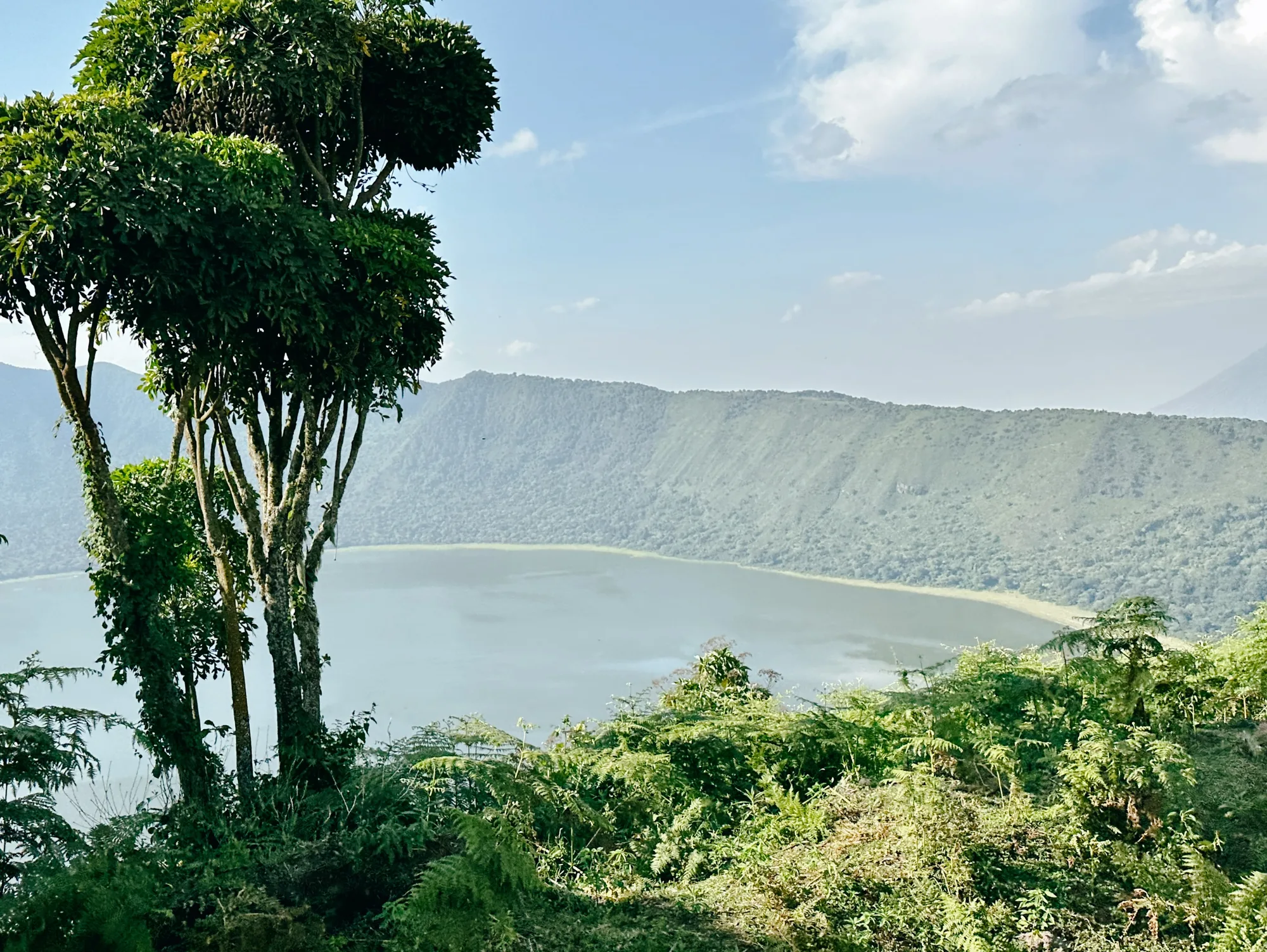
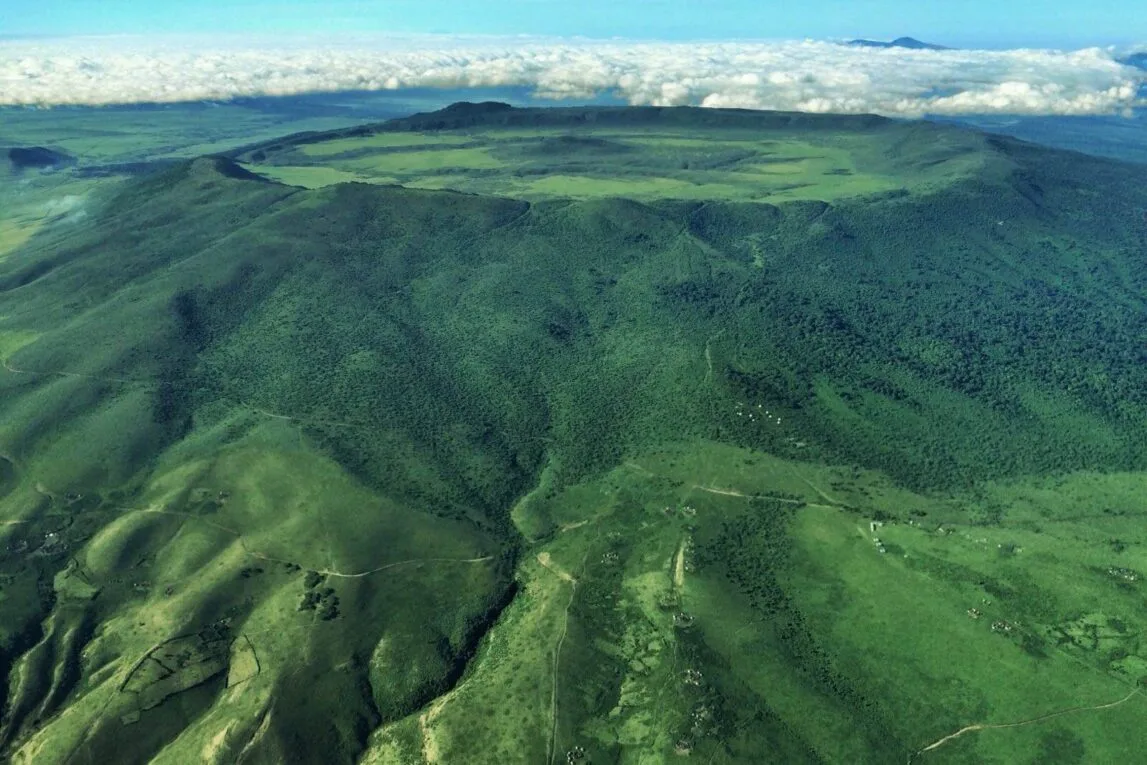
The Ol Moti Crater hike climbs to 3,050m on the western edge of the Ngorongoro Conservation Area, higher than the famous Ngorongoro Crater and almost entirely without other tourists. The 7km caldera is densely forested, with views on clear days stretching to Lake Manyara and the Serengeti. It is a half-day trek best combined with a Ngorongoro or Serengeti itinerary.
A Volcanic Giant with a Quiet Charm
Location and Landscape
Ol Moti Crater sits on the western edge of the Ngorongoro Conservation Area and is part of the East African Rift system. Towering at about 3,050 meters (10,000 feet), it offers breathtaking views of the rift valley, Lake Manyara, and even the Serengeti on clear days.
Unlike its more famous neighbor, the Ngorongoro Crater, Ol Moti remains less visited. Its 7-kilometer-wide caldera is densely forested, providing a serene and uncrowded experience ideal for hikers seeking solitude and connection with nature.
What to Expect on the Hike
Trekking Routes and Terrain
The hike usually begins near the villages of Olmoti or Karatu. Guided by knowledgeable locals, visitors follow trails that wind through thick montane forests, climb steep ridges, and trace the crater rim.
Forest Walks and Wildlife
Lower elevations are blanketed with trees like mahogany, fig, and camphor. Along the way, you may spot blue monkeys, colobus monkeys, bushbucks, and dozens of bird species that thrive in the cool, forested environment.
Crater Rim and Floor Exploration
Upon reaching the summit, panoramic views reward your effort. Some routes descend into the crater itself, revealing open grasslands, streams, and hidden meadows. The full hike can last between 6 and 8 hours, but it’s flexible based on your fitness and interests.
Why Ol Moti Matters Ecologically
A Living Watershed
The forest plays a vital role in collecting and distributing water across the region. Its streams and runoff feed into wetlands that support nearby wildlife and communities.
Biodiversity Refuge
Ol Moti is a biodiversity hotspot. It shelters rare and endemic species, adding value to conservation efforts in the Ngorongoro highlands.
Natural Climate Regulator
As a montane forest, the crater helps balance local climate patterns through carbon absorption and moisture retention.
A Sacred Landscape for the Maasai
The Maasai have long considered Ol Moti sacred. Their pastoralist culture is intertwined with the land, and the crater is a place of both spiritual and practical importance.
Community-Based Tourism
Local guides, homestays, and cultural programs allow visitors to engage respectfully with Maasai traditions. These initiatives support livelihoods and promote conservation through responsible tourism.
Planning Your Visit
When to Go
The best time to hike Ol Moti is during the dry seasons: June to October and December to February. Trails are less slippery, and the views are clearest during these months.
Permits and Guides
A licensed guide is mandatory. Permits must be secured through the Ngorongoro Conservation Area Authority (NCAA). Local guides not only ensure safety but also enrich the experience with stories, history, and ecological knowledge.
What to Bring
Prepare for a full-day hike. Essentials include:
-
Sturdy hiking boots
-
Refillable water bottle
-
Snacks or packed lunch
-
Sun hat and sunscreen
-
Rain jacket (weather can change quickly)
Where to Stay
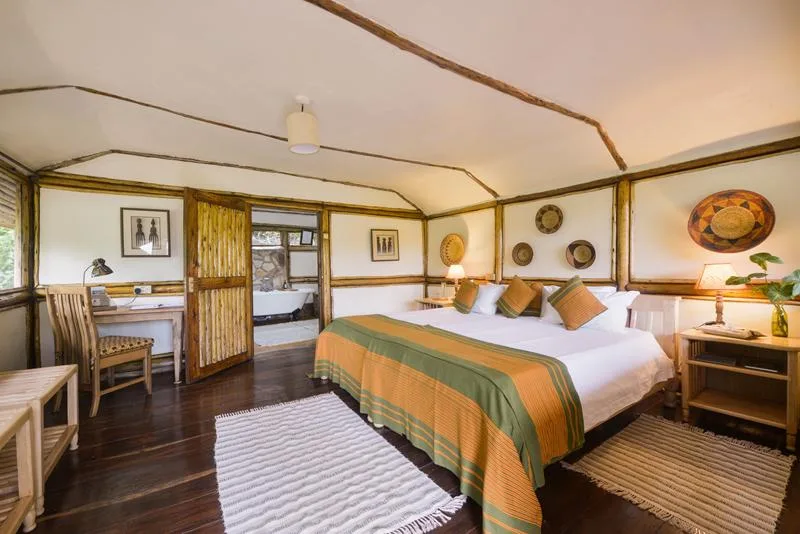
Accommodation ranges from nearby campsites to mid-range and luxury lodges in Karatu and the surrounding areas.
Protecting Ol Moti – A Shared Responsibility
Conservation efforts rely on community and visitor cooperation:
-
Local Involvement: Maasai communities play a direct role in preservation through eco-tourism and conservation projects.
-
Education Initiatives: Programs raise awareness about forest protection and sustainability.
-
Research Support: Scientific studies monitor the region’s ecological health and guide conservation strategies.
Final Thoughts
The Ol Moti Crater hike offers more than just a beautiful trek. It’s a journey into the heart of East Africa’s geological and cultural identity. With its scenic trails, meaningful community engagement, and commitment to conservation, Ol Moti stands out as a must-visit for eco-conscious travelers. Check our safari guide for practical trip planning tips.
If you’re looking for an adventure off the beaten path that connects you deeply with nature and people, the Ol Moti Crater hike should be high on your Tanzanian itinerary.
The Ngorongoro highlands reward those who linger. Our 9 Days Northern Circuit Tanzania Safari builds in time for both crater hikes alongside the Serengeti and Lake Manyara. The 6 Days Tanzania Wildlife and Cultural Safari is a shorter option that still takes in the Ngorongoro Conservation Area. Also worth reading: the Empakaai Crater Hike for another dramatic volcanic walk nearby, and Visiting Lake Natron, the flamingo-pink soda lake lying just north of the highland rim. For everything else Tanzania holds, our Tanzania destination guide covers the full country.