Lake Natron is a highly alkaline soda lake in northern Tanzania, with pH levels above 10.5 and water temperatures that can reach 60 degrees Celsius near volcanic springs. Despite conditions that would calcify most animals, it is the sole breeding site for nearly 75% of the world’s Lesser Flamingos, with up to 2.5 million birds gathering here at peak season. It sits at the base of Ol Doinyo Lengai, the world’s only active natrocarbonatite volcano, and is best visited on a day trip from the Ngorongoro area.
Where Is Lake Natron and How Did It Form?
Lake Natron lies within the Great Rift Valley, near the border between Tanzania and Kenya, approximately 90 kilometers east of Lake Manyara National Park. It is a shallow, alkaline lake formed in a volcanic basin, occupying roughly 57,000 hectares.
-
Formation: The lake’s existence is largely attributed to the volcanic activity of nearby Ol Doinyo Lengai, the world’s only active natrocarbonatite volcano, which continuously emits carbonatite lava rich in sodium carbonate.
-
Alkalinity and Salinity: Lake Natron’s waters are highly alkaline, with pH levels often exceeding 10.5, and salinity levels comparable to seawater or higher. These extreme chemical conditions result from high evaporation rates in this arid region combined with mineral deposits from volcanic runoff.
-
Temperature: Water temperatures can reach up to 60°C (140°F), creating a harsh environment unsuitable for most aquatic life.
Wildlife and Ecology of Lake Natron
Despite its inhospitable conditions, Lake Natron supports a rich and unique ecosystem with several species adapted to thrive in this extreme habitat:
-
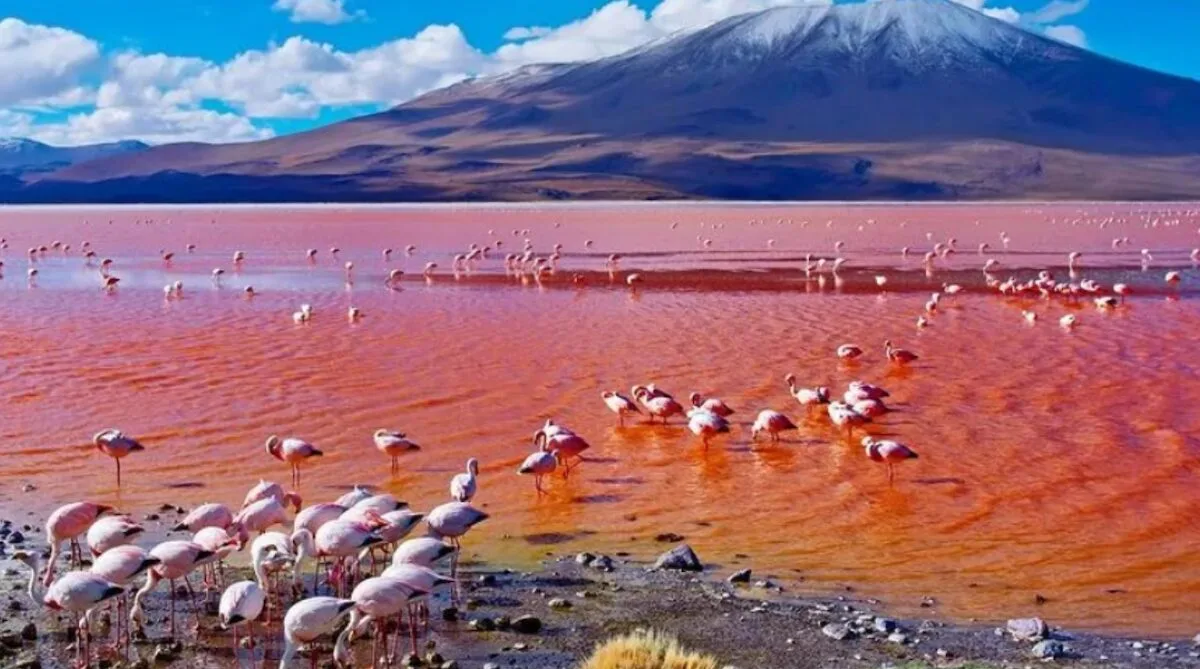
Flamingo Breeding Ground: The lake is famously one of the world’s most important breeding sites for the lesser flamingo (Phoeniconaias minor). Tens of thousands of these birds flock to the lake annually to breed on its mineral-rich shores.
-
Specialized Fauna: Other species adapted to the lake’s conditions include alkaline-tolerant algae, bacteria, and brine shrimp, which form the base of the food chain for flamingos and other birds.
-
Bird Diversity: Beyond flamingos, the lake attracts various migratory and resident bird species, making it a crucial site for birdwatchers and ornithologists.
-
Surrounding Wildlife: The broader Natron Basin supports diverse wildlife such as giraffes, zebras, and predators that rely on the lake’s ecosystem for sustenance.
Environmental Threats and Conservation
Lake Natron’s delicate ecosystem faces multiple threats that require careful management and conservation:
-
Human Activities: Proposed developments such as soda ash mining and large-scale tourism projects pose risks to the lake’s ecology and the breeding grounds of flamingos.
-
Climate Variability: Changes in rainfall patterns and increased evaporation rates due to climate change impact water levels and habitat stability.
-
Local Livelihoods: Communities around the lake depend on pastoralism and small-scale agriculture, creating a need to balance resource use with conservation.
In recognition of its ecological value, Lake Natron and its surrounding wetlands are designated as a Ramsar Wetland of International Importance and are part of the broader Serengeti-Mara ecosystem.
Maasai Communities and Lake Natron
Lake Natron is embedded within the cultural landscape of the Maasai and other indigenous communities:
-
Traditional Practices: The Maasai people have lived around the lake for generations, practicing pastoralism and maintaining spiritual connections to the land.
-
Tourism Potential: The lake’s stunning landscapes and wildlife attract eco-tourists, photographers, and adventurers, offering opportunities for sustainable community-based tourism.
-
Conservation Partnerships: Collaboration between local communities, conservation organizations, and government agencies is vital for ensuring the lake’s long-term protection and sustainable development.
What to See and Do at Lake Natron
For travelers, Lake Natron presents a striking destination known for its surreal beauty and unique wildlife experiences:
-
Scenic Views: Visitors are mesmerized by the lake’s vivid red, orange, and pink hues, created by microorganisms and mineral deposits under the intense sun.
-
Flamingo Watching: The spectacle of thousands of flamingos breeding on the lake’s shores is a highlight for nature enthusiasts.
-
Hiking Opportunities: Nearby volcanic formations and hot springs offer trekking and exploration activities.
-
Cultural Engagement: Interaction with Maasai communities provides insight into traditional lifestyles and conservation efforts.
Lake Natron is a testament to nature’s ability to adapt and flourish under extreme conditions. Its ecological uniqueness, spectacular scenery, and cultural richness make it an invaluable asset to Tanzania and the world.
Protecting this fragile ecosystem requires a balanced approach that integrates conservation, community well-being, and responsible tourism, ensuring that Lake Natron continues to inspire awe and sustain life for generations to come.
Lake Natron is best combined with the Ngorongoro highlands on our 9 Days Northern Circuit Tanzania Safari, which can be routed to include the lake as a final stop before Arusha. The 14 Days Tanzania Safari and Kilimanjaro Adventure offers scope to add the lake to a broader northern Tanzania journey. Pair your reading with the nearby Empakaai Crater Hike and the ancient human history of Olduvai Gorge. If you’re combining Tanzania with a coastal extension, read our guide to Stone Town, Zanzibar. For everything else Tanzania holds, our Tanzania destination guide covers the full country.